In recent times, the Christian Association of Nigeria (CAN) has raised alarm over what it describes as a “genocide” against Christians in Nigeria. While concerns about insecurity and targeted attacks in certain regions are legitimate and deeply troubling, framing these national security issues as a “Christian genocide” raises serious questions. What does CAN stand to gain by amplifying this narrative—especially at a time when Christians hold significant positions in leadership and enjoy unprecedented access to power and privilege in the country?
A critical look at Nigeria’s current political and administrative landscape reveals that Christians have never been more represented in governance. From the presidency to state governments and the legislature, Christian leaders occupy key offices that shape the nation’s direction. Nigeria has produced Christian Presidents, Vice Presidents, Senate Presidents, and Governors across several states. This reality challenges the idea of a systemic anti-Christian conspiracy or an orchestrated “genocide” agenda.
Across Nigeria, Christian influence remains strong and visible. In almost every street, there are at least two denominational churches—except perhaps in gated estates that may have one central worship center. Most government establishments also have two chapels: one for Catholics and another for Pentecostal or Protestant congregations. This structure underscores the degree of religious freedom Christians already enjoy across the nation.
The inclusiveness is even more evident within the Aso Rock Presidential Villa. The First Lady of Nigeria, Senator Oluremi Tinubu, is an Assistant Pastor at the Redeemed Christian Church of God—a devoted Christian who has consistently used her office to promote unity, compassion, and faith. She has opened the Villa to Christian leaders more than any First Lady in recent history. Her charitable gestures—ranging from material to financial donations—have been remarkable, all aimed at assuring Nigerians that her husband’s administration is for all citizens regardless of religion.
The Villa’s Chaplain, Rt. Revd. (Dr.) Steven Adegbite, is not just a spiritual leader but also serves as the Executive Secretary of the Nigerian Christian Pilgrim Commission (NCPC). His dual role grants him direct access to both the Villa and national leadership. If there truly were an organized attempt at “Christian genocide,” as some claim, he would be in the best position to raise the alarm directly to the President. The absence of such evidence speaks volumes.
This brings us to a crucial question: why is CAN advancing this narrative now?
While insecurity affects people of all faiths—Muslims, Christians, and others alike—isolating these national challenges as “Christian-only” issues risks politicizing national pain and dividing communities. There are growing concerns that certain leaders within CAN’s hierarchy may be positioning themselves ahead of the 2027 elections, using the rhetoric of persecution to attract sympathy and political leverage.
This is a dangerous and unspiritual path. As Scripture reminds us, “You cannot serve both God and mammon” (Matthew 6:24). The Church must not become a pawn in partisan politics. It must remain a moral compass, not a megaphone for manipulation.
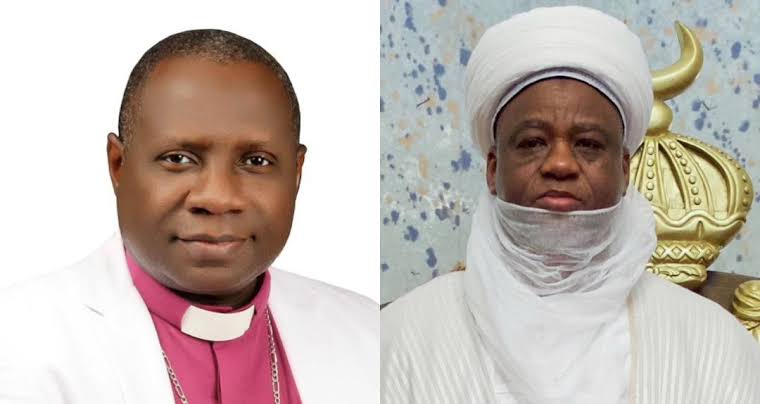
At this critical juncture, it is also important to highlight the role of the Nigeria Inter-Religious Council (NIREC)—an institution designed precisely to address issues of religious tension and misunderstanding.
NIREC is a voluntary association made up of sixty (60) members: thirty (30) Christians and thirty (30) Muslims. It was originally formed on the 11th of September, 1999, with fifty (50) members—twenty-five from each faith—but was reviewed in March 2019 to include more women and youth. The establishment of NIREC was driven by the need to respond to incessant ethno-religious crises that punctuated Nigeria’s socio-political landscape.
NIREC serves as a permanent and independent body that provides religious leaders and traditional rulers with a credible platform for dialogue, collaboration, and mutual understanding. It lays the foundation for sustainable peace, religious harmony, and social cohesion in the country. As such, NIREC has a major role to play in deliberating and stating the true state of religious affairs in Nigeria. Its position—grounded in inclusivity, representation, and mutual respect—should serve as a reference point in discerning truth from politically motivated narratives.
In view of this, CAN must work hand-in-hand with NIREC and other interfaith institutions to promote national unity, not deepen division. The association’s strength should be used to build bridges, not to stoke suspicion or fear.
Nigeria’s Christian community has thrived despite challenges, and its leaders have continuously shaped the nation’s destiny. The right response now is not to amplify fear, but to strengthen faith, uphold truth, and champion peace.
The Church in Nigeria stands as a beacon of hope and moral authority. But to preserve that moral capital, its leaders must separate faith from politics, conviction from ambition, and truth from propaganda.