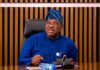
The Independent Corrupt Practices and Other Related Offences Commission (ICPC) has identified several federal civil servants it alleges helped Adeniyi Adeyemi, the self-styled Director-General of the disowned Presidential Foreign Intervention Promotion Council (PFIPC), gain access to government offices and administrative systems.
The revelations are contained in the commission’s interim investigation into the controversial agency, which the Federal Government has said was never legally established. The investigation was ordered by President Bola Tinubu following the discovery that Adeyemi had allegedly used forged government documents to present the organisation as a legitimate federal agency.
According to the ICPC report, the alleged scheme went beyond the use of forged documents, as some government officials reportedly processed applications and facilitated approvals that enabled the purported agency to operate within the federal bureaucracy.
Among the officials named by the commission are Rose Achem, a senior administrative officer to the Director-General of the Budget Office of the Federation; Patricia Akhigbe, an assistant director in the Ministry of Budget and Economic Planning; and Mimi Abu, director of Organisation Design and Development at the Office of the Head of the Civil Service of the Federation.
The ICPC said the officials were involved in processes that enabled the purported PFIPC to obtain an authorised establishment and recruitment waiver.
Investigators alleged that Achem introduced Akhigbe to Abu as the head of human resources of the PFIPC, despite Akhigbe being an assistant director in the Ministry of Budget and Economic Planning.
The commission said the process eventually facilitated approval of the purported agency’s establishment and recruitment arrangements.
How the agency gained government recognition
The ICPC investigation found that Adeyemi began seeking formal recognition from government institutions in November 2024, when he approached the Office of the Accountant-General of the Federation for an administrative code, self-accounting status and approval to open accounts with the Central Bank of Nigeria.
He reportedly submitted documents including an appointment letter, an establishment instrument and a letter on State House letterhead purportedly signed by an official identified as Akanbi Adewale.
Investigators subsequently found that the alleged official did not exist and that forensic examination indicated the letter attributed to him had actually been signed by Adeyemi.
Despite the irregularities, the documents were processed by government institutions.
On 27 May 2025, the Office of the Accountant-General of the Federation granted the purported agency self-accounting status and assigned it administrative code 0111062001.
The move enabled the organisation to secure recognition in the 2026 federal budget and gain access to government financial systems. The OAGF also created a Government Integrated Financial Management Information System platform and a Sub-Treasury Account for the purported agency.
The office later directed the CBN to create two domiciliary accounts for the organisation. The CBN subsequently told the House of Representatives that the accounts were never activated because authorised signatories were not provided.
Alleged payments to officials
The investigation also examined financial transactions involving some of the officials allegedly connected to the scheme.
According to the findings reported from the ICPC investigation, Patricia Akhigbe allegedly received ₦500,000 from Adeyemi as an “Easter thank-you,” while Aminu Abdullahi, an official involved in office allocation at the Office of the Secretary to the Government of the Federation, allegedly received ₦3.25 million in three separate payments.
The ICPC is examining whether the payments were connected to assistance allegedly provided to the purported agency.
Abdullahi was also accused of helping the organisation secure office space at the Federal Secretariat in Abuja, despite the absence of written approval for the allocation.
Investigation continues
The ICPC’s findings have deepened concerns over how a purported government agency without a valid legal foundation was able to obtain official recognition, office accommodation, budgetary status and access to government financial systems.
In a subsequent report, the commission recommended administrative action against 13 public officials over their alleged roles in the scandal. It also recommended that Adeyemi be prosecuted for alleged forgery, impersonation, false statements to public officers and criminal misrepresentation.
The commission has further recommended investigations into the roles of officials in the Ministries of Foreign Affairs and Finance, as well as other individuals and institutions connected to the purported agency.
The Presidency had earlier stated that the PFIPC was never established by any law, executive order, presidential instrument or other valid government action. Adeyemi has denied wrongdoing and maintained that his appointment was legitimate.
The ICPC investigation is expected to help determine the extent of official involvement and whether additional individuals or institutions should face administrative or criminal consequences.